Where do you start?
Three constraints decide the starting point: position, foot shape and budget. Players who know their position start there, players with a fit problem start with foot shape, and players with a fixed budget start with price.
Each route below leads to a section that narrows the field further. No single page ranks every basketball shoe, because the right shoe depends on which constraint binds first.
Which basketball shoes are available now?
No current-generation model has a verified, rights-cleared photograph on this site yet. Rather than show an empty grid or an old photo passed off as new, this section explains the standard and points to real current-model coverage instead.
Current-model cards are added only once verified
A model appears here after this site confirms the exact generation and secures a real, rights-cleared photograph of it — never before. Explore the current signature lines below, or go straight to a brand hub for dated prices on today's models.
Which signature lines can you explore?
All 7 brands this site tracks run at least one current signature line, across 10 destinations below. Each links to a brand hub or line guide with dated prices and verified current models — not a product listing.
Which older models are still worth knowing?
Five previous-generation models, one per brand, still explain a lot about how each line has changed. Every model below is superseded — each card names the generation and links to the brand hub that names the current one.
-
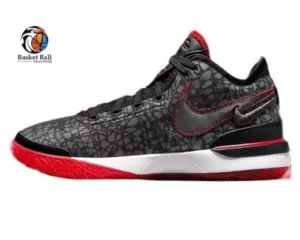
Nike LeBron 20
Previous generation
See the current LeBron model.
-
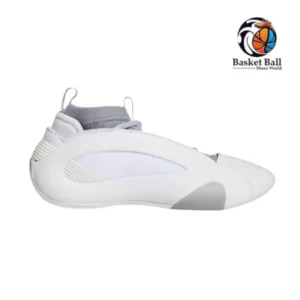
adidas Harden Volume 8
Previous generation
The current model is the Volume 10.
-
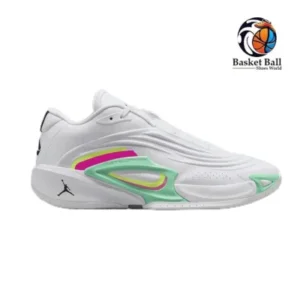
Jordan Luka 3
Previous generation
The current model is the Luka 5.
-
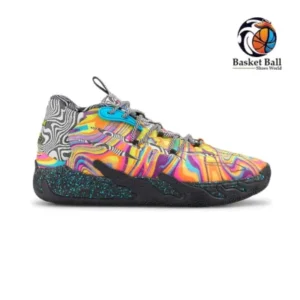
Puma MB.03
Previous generation
The current model is the MB.06.
-
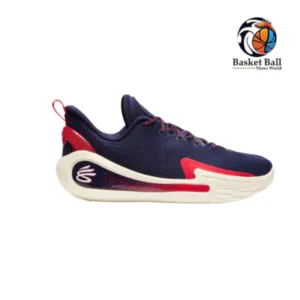
Under Armour Curry 12
Legacy line
Under Armour no longer makes a Curry model.
Which basketball shoes suit your position?
Position determines cut, weight and traction priority across 3 position groups. Guards move laterally and take low-profile builds, forwards trade weight for grip and stability, and centres load the midsole hardest on landings.
Which basketball shoes fit your feet?
Foot shape eliminates more models than any other factor. Width, arch height and injury history rule out entire builds before performance ever enters the decision, across the 4 foot conditions below.
What can you get for your budget?
Budget changes which compromise you accept, not whether the shoe performs. Cheaper models usually trade outsole rubber and upper containment before they trade cushioning.
How is a basketball shoe actually built?
Four attributes decide how a basketball shoe performs: cushioning, traction, support and fit. Every model on every brand hub is a different trade-off between these four, not a different quality level.
Basketball Shoes Fit Guide covers sizing in full, and How to Choose covers the full decision order across all four attributes.
Which guides are worth reading first?
These four guides cover fit, choice and upkeep, the questions that come before any specific model. Each is a real, existing page on this site with its own detail.
What else do you need?
Socks change fit more than most players expect. Thickness shifts effective volume inside the shoe, which is why fit problems sometimes resolve without changing the shoe at all. 3 categories sit outside the shoe itself.
How do you check your facts?
Every claim traces to a dated source, and nothing is fabricated to fill a gap. A missing photo or spec is marked missing, not invented — the empty "Latest Basketball Shoes" section above applies that same standard to imagery.
Who writes these reviews?
Mark LaPointe covers basketball footwear on this site. His published work spans hands-on shoe testing and review videos, and the same focus on performance, traction, fit and value carries into these pages.
Curated by Mark LaPointe. More about the site on the About Us page, with the latest posts under Latest Reviews and News.
How do I choose a basketball shoe?
Choice starts with position, foot shape and budget, in that order. Position determines cut and traction priority, foot shape rules out entire builds before performance ever matters, and budget sets which compromises are on the table.
Are expensive basketball shoes worth it?
Price mostly tracks materials and cushioning technology, not performance alone. A $200 shoe typically uses a more advanced foam and a more durable outsole than a $70 shoe, but a well-fitted budget shoe still outperforms a poorly-fitted premium one.
How often do basketball shoes need replacing?
Outsole wear and cushioning breakdown are the real signals, not a fixed timeline. Outdoor courts wear through outsoles faster than indoor courts, and playing 2-3 times a week usually shows in the midsole within 4-6 months.
Do basketball shoes make a real difference in performance?
Traction and ankle support make the largest measurable difference; cushioning makes a smaller one. Outsole rubber compound changes stopping distance on both indoor and outdoor courts, and a supportive upper reduces ankle-roll risk during lateral cuts.
What is the difference between basketball shoes and running shoes?
Basketball shoes prioritise lateral stability and ankle support; running shoes prioritise forward cushioning and low weight. A running shoe's soft, linear-motion midsole compresses unpredictably during a basketball cut, and most running shoes lack the outsole traction pattern basketball courts require.